
Cold Chain Innovations: IoT and AI Keeping Perishables Safe
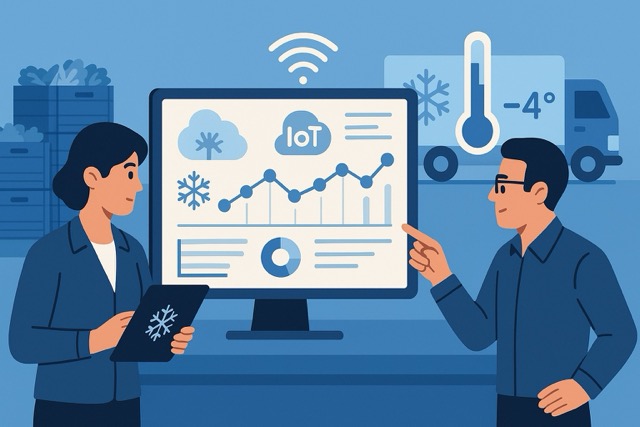
Table of Contents
- Real-Time Monitoring Isn’t Optional Anymore
- Predictive Maintenance Avoids Catastrophic Failures
- Smart Routing Improves Delivery Success and Safety
- Digitally Verifying Compliance Is a Time-Saver
- Waste Reduction Is a Built-In Outcome
- End-to-End Visibility Improves Everyone’s Decision-Making
- Cold Chain AI Scales as You Grow
- How IoT and AI Are Enhancing Cold Chain Safety
- In Conclusion
If you’re responsible for moving temperature-sensitive goods—whether it’s pharmaceuticals, fresh produce, or biologics—you know that one minor slip in storage or transit conditions can ruin entire shipments. That’s where cold chain innovation powered by IoT and AI is making a significant difference. With real-time visibility, predictive analytics, and automated intervention, you’re no longer reacting to problems after the damage is done—you’re staying ahead of them. This article walks you through how smart sensors, intelligent forecasting, and automation are reshaping cold chain operations to help you keep perishables safe, efficient, and compliant from origin to delivery.
Real-Time Monitoring Isn’t Optional Anymore
The days of relying on manual temperature logs and post-mortem audits are behind you. With IoT sensors embedded in refrigerated containers, trailers, or storage facilities, you gain continuous, real-time insight into temperature, humidity, shock, and even door status. These sensors stream live data directly to your control systems or dashboards, allowing you to act immediately when something goes off target.
Instead of finding out about a temperature excursion after delivery, you can dispatch a reroute, adjust refrigeration settings remotely, or notify local teams to intervene before spoilage occurs. That kind of visibility turns cold chain logistics into a proactive process. You don’t just monitor—it gives you command and control.
Predictive Maintenance Avoids Catastrophic Failures
Monitoring tells you what’s happening, but AI tells you what’s about to happen. By applying machine learning to historical and real-time sensor data, you can identify early warning signs of equipment malfunction—like compressor performance degrading or fluctuating internal temperatures suggesting a seal breach. With predictive maintenance algorithms, you don’t need to wait for a breakdown to initiate service.
This means you schedule repairs during non-peak periods, avoid in-transit failures, and extend the lifespan of your cold chain equipment. Companies already using AI-driven maintenance planning are reporting measurable reductions in unplanned downtime and spoilage-related losses. If you’re looking to improve asset reliability without over-maintaining, this is your tool.
Smart Routing Improves Delivery Success and Safety
Routing used to be about finding the shortest or fastest path. Now, it’s about finding the safest path for the product. AI systems integrated with GPS and real-time traffic data allow you to optimize delivery routes not just for speed, but for stability. If a highway is experiencing extreme heat, if a route includes multiple transfers, or if infrastructure along the way is unreliable, the system recommends alternatives.
Combined with IoT tracking, you can monitor the cold chain integrity of each route and adjust future logistics decisions based on actual outcomes, not assumptions. You’re building a data-driven transportation model where every delivery improves the next one.
Digitally Verifying Compliance Is a Time-Saver
Regulatory bodies require strict temperature tracking for vaccines, seafood, meat, and many pharmaceutical products. Instead of piecing together manual records when an audit arrives, your IoT and AI stack creates a continuous digital paper trail. You can generate compliance reports in seconds, with time-stamped data that proves proper handling from dispatch to delivery.
This not only simplifies audits—it makes them less risky. You’re showing regulators, insurers, and clients that your operation meets or exceeds industry standards without scrambling to pull fragmented records. For global supply chains with multiple handoffs, this kind of verifiable traceability is a non-negotiable asset.
Waste Reduction Is a Built-In Outcome
Every time a product spoils in transit, it’s not just revenue lost—it’s also wasted energy, packaging, fuel, and labor. With smart cold chain tech, you’re preventing the issue before it starts. AI helps forecast supply and demand more accurately, so you’re not over-shipping sensitive goods. IoT ensures goods in transit stay within safe ranges, drastically reducing spoilage.
You’re also optimizing power usage in cold storage by using intelligent cooling cycles. Instead of running full power around the clock, the system adapts cooling levels to match load requirements. Less spoilage, less energy, less waste. It’s not just operational savings—it’s sustainability in action.
End-to-End Visibility Improves Everyone’s Decision-Making
When every stakeholder in your cold chain—producers, shippers, distributors, retailers—can access the same real-time data, you eliminate guesswork and reduce conflict. You can provide alerts and updates through a centralized dashboard or mobile interface, ensuring all parties know when a shipment is running late, at risk, or has been compromised.
This transparency builds trust with your customers and partners. It also empowers your team to make smarter decisions because they’re working with live data, not after-action reports. It’s visibility with purpose—everyone from procurement to fulfillment operates with shared intelligence.
Cold Chain AI Scales as You Grow
One concern you might have is whether smart cold chain tools scale with your operation. The good news is most modern IoT and AI systems are built to integrate with your existing infrastructure and expand as your network grows. Whether you’re managing five regional warehouses or fifty distribution points across continents, the tech stack adapts to fit.
And because AI improves as it collects more data, your insights and decision-making sharpen over time. You don’t just get more automation—you get smarter automation. With each cycle, your cold chain becomes more precise, more resilient, and more profitable.
How IoT and AI Are Enhancing Cold Chain Safety
- IoT sensors monitor temperature in real time
- AI predicts equipment failure and spoilage risks
- Smart routing avoids environmental exposure
- Digital records simplify regulatory compliance
- End-to-end data improves transparency and trust
In Conclusion
Cold chain logistics is no longer about just keeping goods cold. It’s about keeping them intelligent. With the integration of IoT and AI, you’re not reacting to problems—you’re preventing them. From real-time monitoring and predictive analytics to energy savings and automated compliance, these technologies are rewriting how cold chains operate. If you’re serious about protecting product integrity, reducing waste, and staying competitive, investing in this innovation isn’t just a good move—it’s a necessary one. And with scalable platforms and decreasing implementation costs, there’s never been a better time to start.
The cold chain, like all logistics, is rapidly evolving. To keep up with my latest analyses and explorations of these critical developments, you can follow me on Medium:
Related Posts

How to Build a Business Case for a New Supply Chain Software
Learn how to build a supply chain software business case with...

Your Warehouse Workers Are Your Biggest Untapped Asset
Treat warehouse workers as a business asset to improve accuracy, safety,...

7 Best Software Solutions for Cold Chain Compliance and Safety
Discover the 7 best cold chain software solutions for compliance, temperature...

The Data Your TMS Provides Is Probably Wrong. Here’s Why.
TMS data accuracy issues can distort ETA, cost, and service reporting....