
From Data to Dollars: How Supply Chain Analytics Drive Profitability
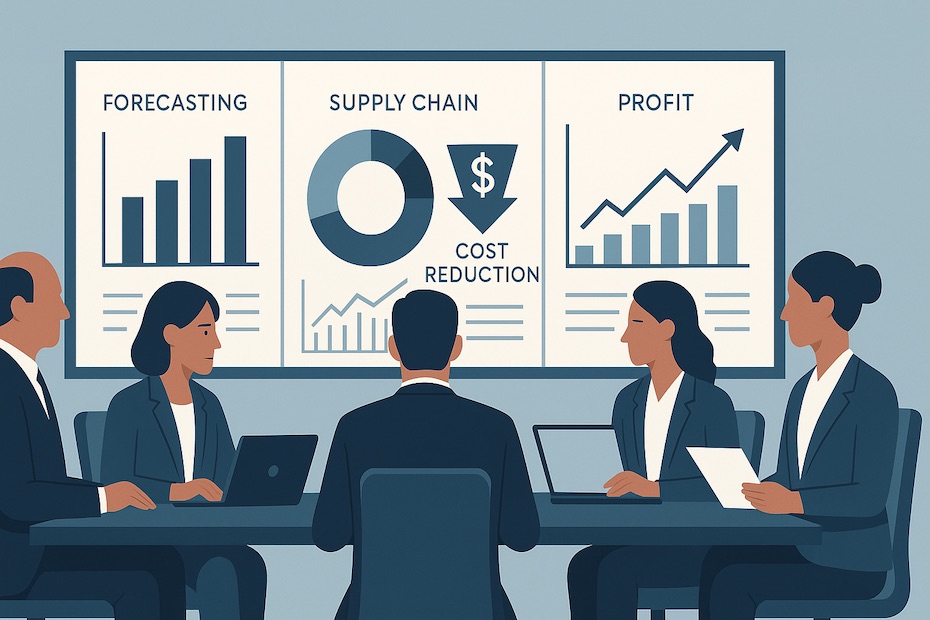
Table of Contents
- What exactly is supply chain analytics?
- How do analytics reduce costs and boost margins?
- How do analytics improve demand forecasting and planning?
- What operational efficiencies can analytics unlock?
- How does analytics support smarter financial decisions?
- How do analytics build resilience and protect revenue?
- How do analytics drive strategic innovation and growth?
- How Supply Chain Analytics Drive Profitability
- In Conclusion
Supply chain analytics drive profitability by turning raw data into insights that cut costs, increase efficiency, and unlock new revenue streams across your operations.
In this article, you’ll see how analytics translates directly into measurable gains. You’ll learn how demand forecasting, cost reduction, risk management, and innovation are shaped by analytics—and why these tools are no longer optional if you want to protect margins and fuel growth.
What exactly is supply chain analytics?
Supply chain analytics is the discipline of collecting, interpreting, and acting on supply chain data to optimize performance and profitability.
You work with information from inventory management systems, supplier networks, logistics partners, and financial systems. Analytics platforms convert that raw data into dashboards, predictive forecasts, and prescriptive recommendations.
The market itself proves its impact. According to Global Trade Magazine, the supply chain analytics industry is projected to reach $44.4 billion by 2033, with North America already holding nearly 43% of the market share. That adoption reflects how widely companies are using analytics to tighten performance and strengthen profitability.
How do analytics reduce costs and boost margins?
Analytics highlights inefficiencies across procurement, production, and logistics, giving you direct levers to lower costs.
You can identify excess inventory, poor-performing SKUs, or bottlenecks driving up expenses. Companies using inventory optimization have cut stock levels by up to 35% while improving service levels, creating millions in savings and improved margins.
For one manufacturer, analytics revealed that 3.6% of profits were lost annually due to expired or overproduced inventory. By implementing predictive demand tools, the company streamlined replenishment and turned waste into recovered profit.
How do analytics improve demand forecasting and planning?
Forecasting accuracy is one of the clearest ways analytics drive profitability.
You combine historical sales data with external factors—seasonality, promotions, weather, and even local events. Fast-food giants like McDonald’s and Taco Bell use AI-driven demand forecasting to reduce food waste and optimize regional stocking, improving service while protecting margins.
When you forecast correctly, you don’t overspend on production or leave customers waiting. This precision reduces waste, maximizes sales, and strengthens cash flow.
What operational efficiencies can analytics unlock?
Operational efficiency translates directly into profitability when you reduce cycle times and eliminate waste.
Analytics pinpoints bottlenecks in manufacturing, shipping, or order fulfillment. By adjusting schedules and routes dynamically, you shorten lead times, improve resource allocation, and deliver faster to customers.
Companies adopting real-time production analytics have seen significant gains in throughput and order accuracy, which not only cuts operational costs but also drives higher customer retention—a direct profit contributor.
How does analytics support smarter financial decisions?
You can’t improve profitability without clarity on financial drains. Analytics equips you with metrics that uncover hidden costs.
- Cost-to-Serve reveals what it actually costs to deliver to each customer, channel, or geography. Many companies discover that certain “profitable” accounts are actually unprofitable when true costs are calculated.
- Days Inventory Outstanding (DIO) measures how long inventory ties up capital. With analytics, you identify slow-moving goods and release working capital faster.
These insights sharpen your decision-making. They give finance and operations leaders the same visibility, creating alignment around actions that strengthen profit margins.
How do analytics build resilience and protect revenue?
Resilience isn’t just risk management—it’s revenue protection. Analytics gives you early warnings when disruptions occur and lets you act before they escalate.
Real-time dashboards powered by IoT sensors and AI-based control towers allow you to track goods in motion. When a shipment is delayed or a supplier signals distress, you receive alerts and pivot quickly.
Firms with advanced analytics were shown by The Wall Street Journal to maintain higher revenue stability during supply chain crises. That resilience not only avoids losses but also builds a reputation for reliability, which converts into repeat business.
How do analytics drive strategic innovation and growth?
The role of analytics extends beyond efficiency—it also uncovers growth opportunities.
Retailers, for example, use analytics to design dynamic pricing models, test new product launches, and optimize promotions by region. E-commerce leaders combine consumer behavior data with logistics analytics to predict where demand will spike and adjust fulfillment strategies to capture incremental sales.
This proactive use of data turns analytics into a revenue-generation tool. You move from merely saving costs to actively driving growth through informed, customer-centric decisions.
How Supply Chain Analytics Drive Profitability
- Lower costs with smarter inventory management
- Improve forecasting accuracy
- Optimize financial metrics
- Boost resilience with real-time data
- Unlock growth through innovation
In Conclusion
By embedding analytics into every stage of your supply chain, you move from reactive management to profit-driven leadership. Analytics helps you cut costs, sharpen forecasts, enhance financial clarity, and capture growth opportunities. The result is not just operational efficiency but sustained profitability—data working directly for your bottom line.
For more insights on supply chain analytics and leadership, visit my FreightWaves speaker profile.
Related Posts

How to Build a Business Case for a New Supply Chain Software
Learn how to build a supply chain software business case with...

Your Warehouse Workers Are Your Biggest Untapped Asset
Treat warehouse workers as a business asset to improve accuracy, safety,...

7 Best Software Solutions for Cold Chain Compliance and Safety
Discover the 7 best cold chain software solutions for compliance, temperature...

The Data Your TMS Provides Is Probably Wrong. Here’s Why.
TMS data accuracy issues can distort ETA, cost, and service reporting....