
Measuring What Matters: How to Track Supply Chain Sustainability Performance
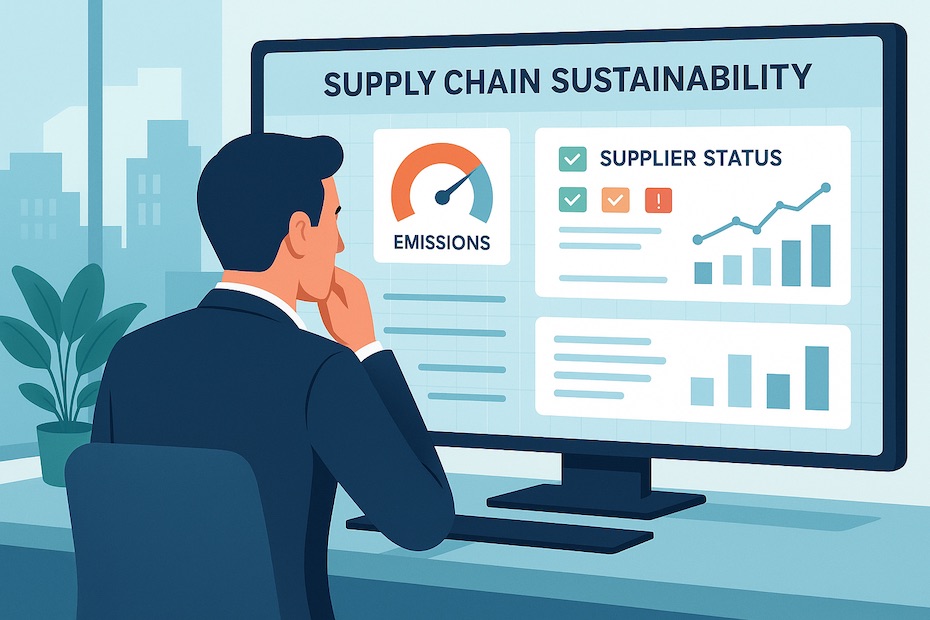
Table of Contents
- What metrics are used to measure supply chain sustainability?
- How do you track Scope 3 emissions in a supply chain?
- What tools help monitor supply chain sustainability?
- Why is supply chain transparency important?
- How often should sustainability performance be reported?
- Benefits of tracking these metrics
- Steps to get started
- How to track supply chain sustainability?
- In Conclusion
You track supply chain sustainability by monitoring key metrics—emissions, waste, compliance, and delivery precision—using real-time tools and standardized reporting protocols.
In this article, you’ll learn exactly which metrics matter, how to collect actionable data, what tools to use, and how often to report performance. Whether you’re responsible for ESG goals or supplier risk, you’ll walk away with a clear roadmap for driving measurable, sustainable progress.
What metrics are used to measure supply chain sustainability?
To accurately track sustainability in your supply chain, you need a focused set of metrics that reflect environmental, operational, and social performance. These typically include Scope 1, 2, and 3 carbon emissions, waste generation, water usage, supplier code-of-conduct compliance, and delivery reliability indicators like On-Time-In-Full (OTIF).
You’ll want to prioritize a few core KPIs, such as emissions per unit delivered, percentage of shipments using green logistics, and supplier sustainability scorecards. Performance metrics like the Perfect Order Index and Carbon Intensity per Product Line are commonly used to maintain visibility. By aligning your measurement approach with these targets, you’re able to pinpoint operational weaknesses while demonstrating compliance to regulators and stakeholders.
How do you track Scope 3 emissions in a supply chain?
Tracking Scope 3 emissions is non-negotiable if you’re serious about end-to-end sustainability. These indirect emissions—often 70%+ of your total carbon footprint—come from upstream suppliers and downstream transporters, and they require a proactive approach to data collection.
Start by engaging tier-1 suppliers to submit emissions data through a standardized platform like EcoVadis or CDP Supply Chain. If direct data isn’t available, you can estimate values using Life Cycle Assessment (LCA) tools aligned with ISO 14040/44. You’ll need to regularly update emission factors based on geography, transport mode, and material type. Validating that data with third-party audit firms helps you maintain reporting integrity, especially when investors or regulatory bodies demand transparency.
What tools help monitor supply chain sustainability?
Several technologies are purpose-built to track sustainability performance in real time. Leading platforms like EcoVadis, Higg Index, and TRACT consolidate supplier emissions, environmental practices, labor audits, and waste data into one interface. These tools provide visual dashboards that highlight risk-prone suppliers, carbon-intensive routes, or lagging facilities.
Satellite-based tools, such as those integrated into ESGTrace and Circulor, enhance traceability in industries like mining, fashion, and food. Volvo’s Battery Passport, which lets customers trace the origin of raw materials used in EV batteries, is a real-world example of granular traceability powered by blockchain and data analytics. You should evaluate these tools based on your company’s ESG priorities—whether it’s labor safety, decarbonization, or circular economy compliance.
Why is supply chain transparency important?
Transparency builds resilience and protects brand equity. With 41% of ESG impact linked to supply chain operations, failure to track and disclose accurate data can invite regulatory penalties, reputational damage, or investor withdrawal. You need visibility to assess whether your suppliers adhere to ethical practices, environmental policies, and delivery promises.
When you make sustainability data visible—internally and externally—you foster accountability across procurement, logistics, and compliance teams. Public disclosure, whether in the form of annual ESG reports or digital traceability platforms, reassures stakeholders that your claims are backed by data. It also simplifies audit preparation and strengthens partnerships with large buyers and institutional investors who increasingly demand ESG credentials.
How often should sustainability performance be reported?
Reporting frequency depends on what you’re measuring. For operational KPIs—like OTIF, fuel efficiency, or waste—you’ll benefit from monthly dashboards. This cadence helps you spot outliers quickly and correct course without delay. For strategic metrics, like year-over-year emissions reductions or supplier compliance rates, quarterly or annual reports are typically sufficient.
To align with global standards, such as ISO 20400 or GRI, you should publish at least one comprehensive annual sustainability report. Internally, monthly pulse reports or scorecard reviews with supply chain leaders can help maintain visibility and momentum. Consistency is critical—whether you’re reporting to executives or external regulators, keep formats and timelines stable to build trust.
Benefits of tracking these metrics
When you track sustainability metrics with precision, you unlock both environmental and financial benefits. Emissions reductions often translate directly to cost savings—less fuel burned, optimized logistics, and smarter packaging strategies. Waste reduction lowers disposal fees and material costs.
Risk exposure also drops. By identifying non-compliant or underperforming suppliers early, you avoid production disruptions, fines, or brand damage. Investors now favor data-backed ESG progress, not policy statements. The ability to prove your supply chain’s environmental performance can be a key differentiator when bidding for contracts, acquiring funding, or entering new markets.
Steps to get started
Begin by identifying 3–5 primary metrics that align with your company’s sustainability goals. For most, that includes Scope 3 emissions, waste-to-landfill rate, and supplier compliance scores. Next, choose tools that match your existing ERP ecosystem to minimize integration friction. Whether you’re using SAP Ariba, Oracle SCM, or a mid-tier solution, make sure the sustainability module connects with procurement and logistics data.
Set performance targets that are both ambitious and trackable—such as reducing Scope 3 emissions by 15% over 24 months or moving 50% of tier-1 suppliers to verified ESG platforms. Then, establish a cadence of internal and external reporting, pairing performance numbers with remediation plans for underperforming areas. Finally, bring suppliers into the fold. Offer onboarding, explain the value of transparency, and create incentives for compliance. The more collaborative your approach, the faster your network adapts.
How to track supply chain sustainability?
- Monitor emissions, waste, delivery reliability, and supplier scores
- Use tools like EcoVadis, TRACT, or Higg Index
- Report monthly (operational) and annually (strategic)
In Conclusion
You can’t manage what you don’t measure. By focusing on the right sustainability KPIs, adopting smart tools, and reporting consistently, you position your supply chain as a strategic asset—not a compliance liability. From supplier collaboration to emissions tracking, it’s about operationalizing sustainability into your day-to-day logistics and procurement decisions.
For ongoing discussions about supply chain sustainability metrics, reporting best practices, and ESG innovations, connect with me on Facebook. I share practical insights, industry case studies, and emerging tools to help businesses measure what matters.
Related Posts

How to Build a Business Case for a New Supply Chain Software
Learn how to build a supply chain software business case with...

Your Warehouse Workers Are Your Biggest Untapped Asset
Treat warehouse workers as a business asset to improve accuracy, safety,...

7 Best Software Solutions for Cold Chain Compliance and Safety
Discover the 7 best cold chain software solutions for compliance, temperature...

The Data Your TMS Provides Is Probably Wrong. Here’s Why.
TMS data accuracy issues can distort ETA, cost, and service reporting....