
Metaverse and Supply Chain: Could Virtual Worlds Improve Collaboration?
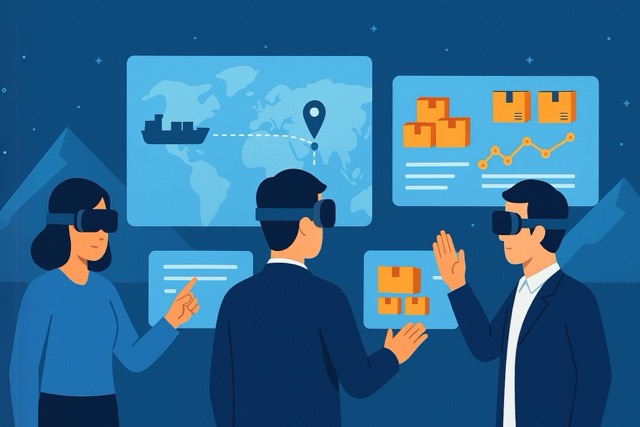
Table of Contents
- Reimagining Collaboration with Virtual Supply Chain Rooms
- Using Digital Twins to Monitor the Physical World
- Simulating Scenarios Before They Happen
- Virtual Training and Process Walkthroughs Without Disruption
- Building Transparency Through Shared Virtual Supply Chains
- What You Need to Get Started
- Where the Limitations Still Exist
- How Can the Metaverse Help Supply Chains Collaborate Better?
- In Conclusion
If you’re looking for new ways to streamline collaboration, boost real-time decision-making, and visualize your supply chain from end to end, the metaverse may offer more than just futuristic promise—it could become a practical tool. As digital twins, virtual reality, and real-time 3D simulation technology gain traction in enterprise environments, forward-thinking supply chain leaders are beginning to explore how virtual spaces can enable better coordination across complex networks. This article unpacks how the metaverse can reshape your collaborative processes, simulate supply chain scenarios in real time, and support smarter, faster decisions—all without ever needing a conference room.
Reimagining Collaboration with Virtual Supply Chain Rooms
You already deal with fragmented communication—spreadsheets, video calls, disjointed dashboards. In a metaverse-enabled supply chain environment, your teams can enter shared virtual control centers where product flows, vendor interactions, inventory locations, and shipment delays are visualized on immersive 3D dashboards. Rather than looking at flat numbers, you’re interacting with your supply chain as a living, navigable space.
This setup makes cross-functional planning sessions more engaging and actionable. Procurement, warehouse managers, and logistics planners can analyze the same real-time data feed, discuss bottlenecks visually, and resolve coordination issues more efficiently. It doesn’t just replicate meetings—it makes them smarter.
Using Digital Twins to Monitor the Physical World
The backbone of the industrial metaverse is the digital twin—a precise virtual replica of your supply chain assets. You can create digital twins of a warehouse, port, truck fleet, or even an entire distribution network. With real-time sensor feeds linked to these models, you don’t have to guess what’s happening—you can see it.
If there’s a delay at a cross-docking facility, you can inspect a virtual model of the warehouse and pinpoint exactly where the backup starts. If a shipment temperature spikes in transit, you can access the digital twin of that vehicle to track history, environmental conditions, and response options—instantly. That kind of real-time oversight helps you react fast and plan better.
Simulating Scenarios Before They Happen
One of the most compelling metaverse use cases is scenario modeling. Instead of waiting for a disruption to occur, you can simulate it. If a key supplier in Asia goes offline or if port congestion spikes in Rotterdam, you can model the ripple effects on inventory levels, transport routes, and customer delivery timelines—all within a shared 3D environment.
These simulations allow you to build contingency playbooks. They also help you communicate supply risk across your team and external partners more clearly. You’re not just showing charts; you’re walking stakeholders through possible outcomes in an interactive way. That level of engagement makes risk management more proactive and credible.
Virtual Training and Process Walkthroughs Without Disruption
The metaverse isn’t just for analysts. It’s also a powerful environment for workforce training. You can onboard new warehouse staff or show line managers how to operate unfamiliar machinery using interactive simulations—no risk, no downtime, no travel.
Say you’re rolling out a new warehouse management system across multiple regions. Instead of sending trainers or waiting for live system access, you create a virtual instance of the new interface, paired with digital twins of the physical workstations. Your team can walk through every step in a safe environment and be fully ready on day one of rollout.
Building Transparency Through Shared Virtual Supply Chains
Transparency often breaks down when supply chain stakeholders work in silos. With the metaverse, you can give partners access to virtual representations of your shared value chain. A supplier could see live order statuses, inventory forecasts, and shipment routes without needing to exchange dozens of emails.
This level of openness builds trust and improves response times. It also supports sustainability reporting and compliance documentation. When regulators, customers, or auditors want visibility, you can walk them through a virtual representation of your supply chain—with traceability data embedded right into the experience.
What You Need to Get Started
You don’t need to build a full-blown metaverse to start using virtual tools. If you already use IoT sensors, 3D warehouse mapping, or ERP systems with real-time feeds, you’re halfway there. Platforms like NVIDIA Omniverse or Unity’s Industrial Metaverse tools allow you to create immersive spaces using existing supply chain data.
Start by identifying a collaboration pain point—like inefficient stakeholder meetings, delayed issue resolution, or lack of shared visibility across functions. Build a pilot around that. Keep the interface simple, involve users early, and measure whether meetings are faster, outcomes are better, or training time goes down. Small wins create momentum for larger virtual rollouts.
Where the Limitations Still Exist
The metaverse isn’t a plug-and-play solution. The technology is maturing fast, but integration still requires effort—especially when linking real-time operational data from multiple systems. You’ll also need to think about bandwidth, cybersecurity, and hardware requirements if you want your teams to interact using VR headsets or haptic controllers.
Then there’s the adoption curve. Some of your workforce may take time to adjust to working in immersive environments. You’ll need to invest in UX, training, and change management to ensure people don’t just log in—but actually use the tools effectively.
How Can the Metaverse Help Supply Chains Collaborate Better?
- Enables real-time virtual control rooms
- Uses digital twins for accurate tracking
- Supports scenario simulation and planning
- Enhances remote training and onboarding
- Improves partner transparency and trust
In Conclusion
The metaverse is no longer a concept waiting for mainstream relevance—it’s already unlocking new ways for supply chain leaders like you to solve real problems. Whether you’re aiming to boost cross-functional coordination, simulate risks before they disrupt, or train global teams without travel, immersive digital tools can give you an edge. You don’t need to replace your tech stack overnight, but by integrating metaverse-ready capabilities into your collaboration strategy, you’ll create a supply chain that’s not just more connected—it’s more intelligent and adaptable.
For more content on technology, logistics, and emerging trends, please visit my Tumblr profile.
Related Posts
How to Build a Business Case for a New Supply Chain Software
Learn how to build a supply chain software business case with...
Your Warehouse Workers Are Your Biggest Untapped Asset
Treat warehouse workers as a business asset to improve accuracy, safety,...
7 Best Software Solutions for Cold Chain Compliance and Safety
Discover the 7 best cold chain software solutions for compliance, temperature...
The Data Your TMS Provides Is Probably Wrong. Here’s Why.
TMS data accuracy issues can distort ETA, cost, and service reporting....