
The Rise of Digital Twins: Simulating Supply Chain Success
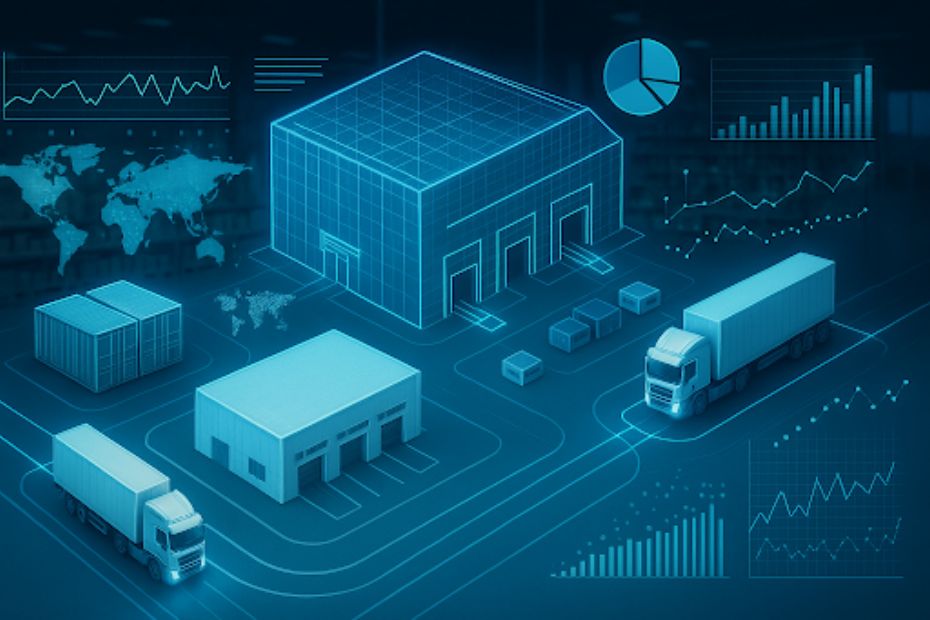
Table of Contents
- See It Before You Build It
- Real-Time Monitoring with Zero Blind Spots
- Run Scenarios Without the Risk
- Improve Collaboration Across the Board
- Optimize Maintenance and Asset Utilization
- Sharpen Your Sustainability Strategy
- Support Smart Expansion Decisions
- How Digital Twins Support Supply Chain Success
- In Conclusion
If you’re managing supply chains in today’s unpredictable environment, you’re probably tired of making decisions based on outdated reports or delayed feedback loops. Digital twins change that. With a digital twin, you get a real-time simulation of your entire operation, letting you test scenarios, identify bottlenecks, and fix problems before they show up in the real world. This article shows you how digital twins are helping companies move faster, waste less, and predict disruptions with precision—without relying on guesswork.
See It Before You Build It
Whether you’re redesigning a warehouse layout or adjusting your procurement strategy, you need to know how those changes will play out. That’s where a digital twin gives you the edge. You can model physical supply chain operations digitally, run simulations, and test different variables without touching your actual assets. That way, you avoid expensive mistakes and fine-tune every part of the system based on how it would perform—not just how you hope it will.
By simulating transportation routes, order flows, and even packaging configurations, you make better planning decisions. You also speed up implementation because you’ve already validated what works and what doesn’t in a risk-free digital environment.
Real-Time Monitoring with Zero Blind Spots
You’ve probably dealt with slow-moving updates from different teams or systems. With a digital twin, that lag disappears. Your digital model syncs with real-time data feeds from IoT sensors, ERP platforms, and warehouse management systems. That means you’re not just reviewing data—you’re watching your entire supply chain in motion.
You can spot temperature drops in a reefer truck, delays at a port, or machinery slowdowns inside a factory. Because everything is visualized in the twin, you see issues faster and act immediately. Whether you’re adjusting schedules or rerouting shipments, you’re operating with live intelligence instead of yesterday’s summary report.
Run Scenarios Without the Risk
You don’t need to wait for a disruption to know how your operation will respond. Want to see what happens if a key supplier fails? Or if fuel prices spike by 40%? Or if consumer demand shifts overnight? You can simulate all of that inside a digital twin.
Instead of reacting to problems when they hit, you identify vulnerabilities in advance. You can model alternative supply routes, test buffer inventory levels, or stress-test supplier handoffs. It helps you create contingency plans that are grounded in real data. So when something actually goes wrong, you already have a playbook that’s been tested.
Improve Collaboration Across the Board
Your logistics team, sourcing managers, and warehouse ops might be working in different systems—but the digital twin gives them a shared visual platform. Everyone sees the same digital version of the operation, updated in real time. That means fewer miscommunications, faster problem-solving, and a stronger alignment between departments.
You can share simulations across teams or even with partners to coordinate better. Maybe your supplier needs to see how delays in raw material impact production lines. Or maybe your shipping carrier wants to test a new delivery model before rollout. The digital twin makes that collaboration smoother and more data-driven.
Optimize Maintenance and Asset Utilization
Breakdowns and equipment wear often catch teams off guard. Digital twins connected to sensor data can monitor usage patterns and predict failures before they happen. If a conveyor is slowing down or a truck’s engine shows unusual heat fluctuations, you’ll know it before it fails.
This lets you schedule preventive maintenance when it’s convenient—not when it’s urgent. You reduce unplanned downtime and stretch the life of expensive assets. The digital twin also helps you visualize equipment utilization rates. So if certain assets are sitting idle or overloaded, you can rebalance resources in real time.
Sharpen Your Sustainability Strategy
Customers and regulators are putting more pressure on businesses to operate sustainably. A digital twin gives you the tools to measure emissions, energy consumption, and waste output at every step of the supply chain. You can model how a change in transportation mode, route, or packaging materials would affect your carbon footprint—without implementing the change first.
You also gain the ability to test sustainability goals before committing to them. Whether you’re trying to meet emissions targets or reduce plastic use in packaging, you get hard data on how realistic and cost-effective each plan is before launching it across your network.
Support Smart Expansion Decisions
If you’re expanding into new markets, adding warehouses, or launching new products, there’s always risk. Will the new location increase delivery speed? Can your network handle the added load? With a digital twin, you answer those questions before you spend a dollar on rollout.
You can simulate what demand will look like, test shipping lanes from a new facility, or analyze which warehouse configuration would handle the volume most efficiently. By running these simulations ahead of time, you avoid overbuilding, underestimating capacity needs, or stretching your team too thin on a hunch.
How Digital Twins Support Supply Chain Success
- Simulate supply chain scenarios without risk
- Monitor operations with real-time data feeds
- Identify and respond to disruptions early
- Improve cross-team collaboration
- Predict equipment failures and optimize use
- Test sustainability initiatives virtually
- Model growth plans before investing
In Conclusion
Digital twins give you a smarter way to manage your supply chain. Instead of guessing what will happen, you simulate it, watch it, and adjust it—before problems become costly. Whether you’re planning expansions, managing day-to-day operations, or reacting to global disruptions, a digital twin gives you the tools to make decisions based on reality, not assumptions. It’s not just another software trend—it’s the control tower your supply chain has been missing.
Want to see how tech like digital twins is transforming real-world logistics? Subscribe for insights and supply chain innovation videos on YouTube.
Related Posts
How to Build a Business Case for a New Supply Chain Software
Learn how to build a supply chain software business case with...
Your Warehouse Workers Are Your Biggest Untapped Asset
Treat warehouse workers as a business asset to improve accuracy, safety,...
7 Best Software Solutions for Cold Chain Compliance and Safety
Discover the 7 best cold chain software solutions for compliance, temperature...
The Data Your TMS Provides Is Probably Wrong. Here’s Why.
TMS data accuracy issues can distort ETA, cost, and service reporting....