
The Role of Blockchain in Enhancing Supply Chain Security
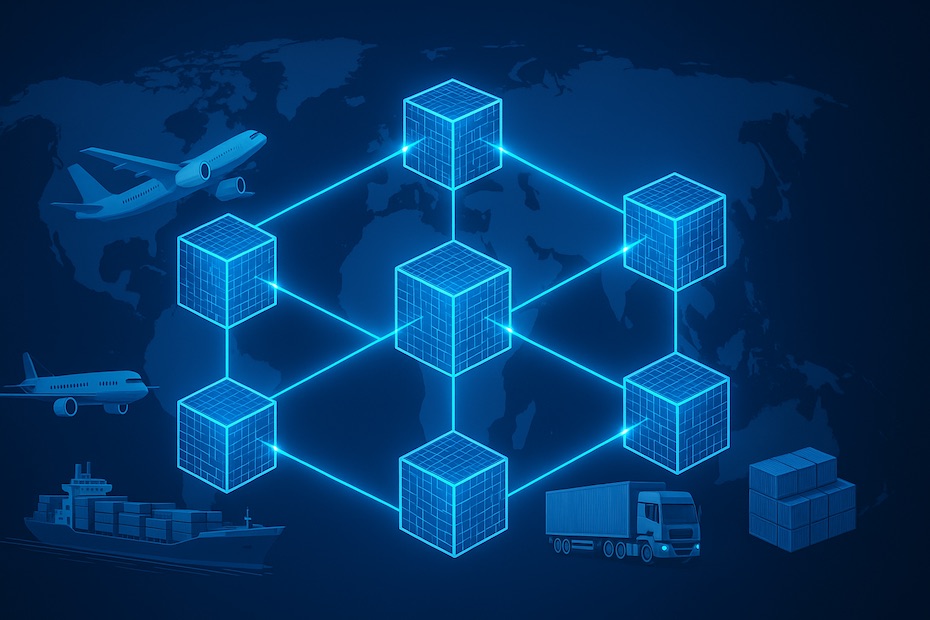
Table of Contents
- What is blockchain in supply chain security?
- How does blockchain prevent product tampering and counterfeiting?
- How does blockchain improve traceability across global logistics?
- Why is blockchain ideal for securing digital documents and compliance data?
- How do smart contracts strengthen supply chain security?
- Can blockchain reduce cybersecurity vulnerabilities in global supply chains?
- How do you implement blockchain in your supply chain securely?
- What industries benefit the most from blockchain in supply chain security?
- How does blockchain improve supplier accountability?
- How Blockchain Secures Supply Chains
- Strengthening Your Supply Chain Through Verified Transparency
You strengthen supply chain security with blockchain by creating a shared, tamper-resistant record of transactions that no party can alter. This lets you trace products, verify authenticity, and eliminate blind spots that create risk.
This guide shows you how blockchain improves trust, prevents counterfeiting, enhances traceability, and increases protection across global logistics. You’ll see how real-time verification, decentralized records, and secure digital identities improve your supply chain from end to end.
What is blockchain in supply chain security?
Blockchain is a decentralized digital ledger that records each transaction in a secure, chronological sequence. You use it to create an immutable chain of custody for goods, documents, and data.
Every participant in the network shares the same record, removing the possibility of hidden changes or unauthorized edits. That transparency strengthens product validation and reduces disputes. You gain a clear view of where items originate, how they move, and who interacts with them.
Blockchain does not rely on a central authority, which eliminates the vulnerabilities found in traditional databases. Its distributed structure makes it extremely difficult for any individual or organization to manipulate records.
How does blockchain prevent product tampering and counterfeiting?
Blockchain stops unauthorized product changes by locking each transaction into a secure digital block. Once recorded, the information cannot be edited or deleted without detection.
This protects industries where counterfeits pose serious risks—food, pharmaceuticals, electronics, and industrial components. Each scan or transaction becomes a verified entry, creating a secure audit trail. You can authenticate goods instantly and confirm that shipments match the certified source.
Counterfeiters rely on supply chain gaps. Blockchain removes these gaps by providing a transparent record from production to delivery. This reduces the probability of fake products entering your network.
How does blockchain improve traceability across global logistics?
You improve traceability by linking every supply chain event—manufacturing, inspection, shipping, customs, warehousing, and final delivery—into a shared ledger. Each participant updates the chain with verified data.
This gives you real-time visibility across borders and transport modes. You track goods at every handoff and confirm that each step meets compliance and safety requirements. This is especially valuable for temperature-sensitive goods, dangerous goods, and high-value assets.
Traceability data also helps you identify delays, unauthorized storage, misrouting, or quality failures. The moment something deviates from the expected path, your system flags it for investigation.
Why is blockchain ideal for securing digital documents and compliance data?
Supply chains rely heavily on documents: bills of lading, customs forms, inspection certificates, packing lists, and contracts. Traditional systems store these documents in disconnected databases, making them susceptible to loss or manipulation.
Blockchain allows you to store document metadata and verification records securely. Participants can confirm document authenticity instantly without relying on physical copies. This reduces fraud and accelerates regulatory clearance.
Digitally signed records ensure that compliance authorities receive reliable information. With blockchain, you create a secure environment where documents cannot be altered without detection.
How do smart contracts strengthen supply chain security?
Smart contracts automate rule-based actions within your supply chain. These self-executing agreements run automatically when pre-defined conditions are met.
You use smart contracts to validate delivery milestones, release payments, confirm inspections, or authorize storage transfers. Because they run on blockchain, they cannot be modified or executed incorrectly.
This creates a secure operational rhythm. You eliminate manual errors, reduce human interference, and maintain strict control over sensitive transactions. Smart contracts enforce compliance reliably across global operations.
Can blockchain reduce cybersecurity vulnerabilities in global supply chains?
Blockchain reduces cyber risk by decentralizing data storage. Instead of relying on a central database—which is easy for attackers to target—you distribute information across multiple nodes.
This structure makes your system more resilient. Attackers cannot compromise a single database to gain broad access. Any attempt to manipulate data is rejected automatically because it conflicts with the verified record stored on other nodes.
Blockchain also provides secure digital identities for each participant. This strengthens authentication, reduces identity spoofing, and prevents unauthorized system entry.
How do you implement blockchain in your supply chain securely?
Start by identifying parts of your supply chain where data tampering, fraud, or visibility gaps occur. These areas deliver the highest return from blockchain adoption.
Choose a blockchain platform capable of handling your transaction volume. Consider integrations with your ERP, WMS, TMS, procurement systems, and quality management tools. Your goal is to create a single, verified flow of data across all systems.
Work with suppliers and logistics partners to align on data standards. Blockchain only works when everyone follows consistent rules for recording events and sharing information. A unified governance model ensures data remains reliable.
What industries benefit the most from blockchain in supply chain security?
Industries with strict traceability, safety, and quality requirements benefit heavily from blockchain. This includes:
- Food and agriculture
- Pharmaceuticals
- Aerospace
- Automotive
- Defense
- Electronics
- Luxury goods
In each industry, blockchain helps you track authenticity, maintain regulatory compliance, confirm sourcing integrity, and reduce the risk of tampering or falsification.
Companies in these sectors use blockchain to improve trust with customers, regulators, and supply chain partners. When proof of origin and proof of handling matter, blockchain becomes a strategic advantage.
How does blockchain improve supplier accountability?
Blockchain forces every supplier to maintain transparent and accurate data. Since no party can change records privately, any inconsistency becomes visible immediately.
This increases accountability for quality, safety, and compliance. If a supplier ships defective or unauthorized batches, you can trace the exact point of failure. This makes it easier to enforce standards and remove high-risk partners.
With blockchain, supplier scorecards become more precise. You base decisions on verified performance rather than anecdotal reports or inconsistent data.
How Blockchain Secures Supply Chains
- Creates tamper-resistant records
- Improves traceability
- Secures digital documents
- Automates compliance
- Reduces cyber risk
Strengthening Your Supply Chain Through Verified Transparency
Blockchain gives your supply chain a secure foundation built on transparency, accuracy, and real-time traceability. By eliminating unauthorized changes, improving supplier accountability, and securing critical documents, you create a supply chain that handles complexity with confidence. As global networks expand, blockchain becomes a strategic tool for protecting your products, your data, and your reputation.
Related Posts
How to Build a Business Case for a New Supply Chain Software
Learn how to build a supply chain software business case with...
Your Warehouse Workers Are Your Biggest Untapped Asset
Treat warehouse workers as a business asset to improve accuracy, safety,...
7 Best Software Solutions for Cold Chain Compliance and Safety
Discover the 7 best cold chain software solutions for compliance, temperature...
The Data Your TMS Provides Is Probably Wrong. Here’s Why.
TMS data accuracy issues can distort ETA, cost, and service reporting....