
The Role of Robotics in Modern Warehousing: Efficiency and Innovation
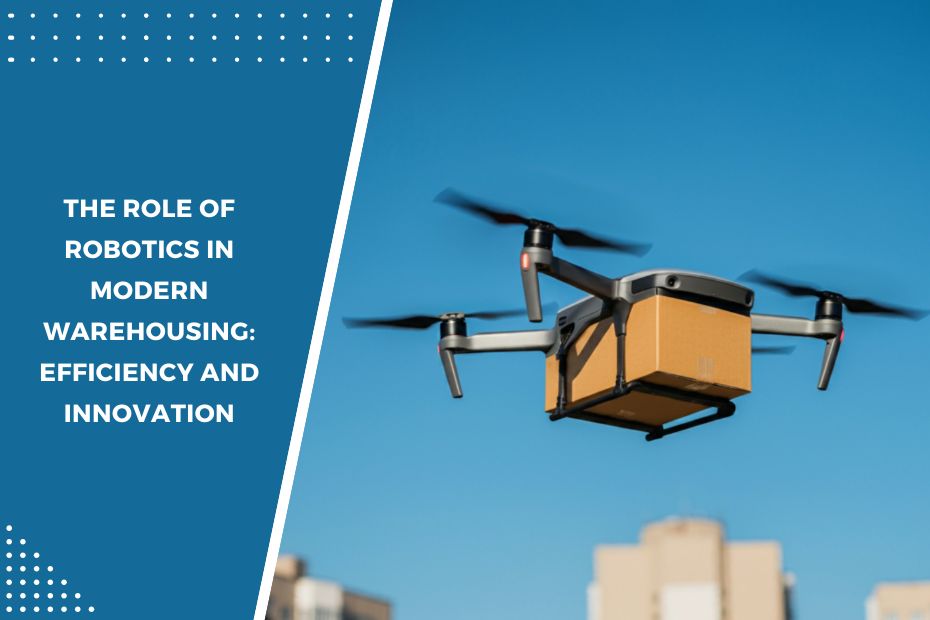
Table of Contents
- Speed and Accuracy with Automated Movement
- Robotic Picking and Packing That Scales with Demand
- Automated Storage Systems Free Up Valuable Space
- Warehouse Drones for Inventory Audits and Hard-to-Reach Areas
- AI-Powered Robotics Systems Keep Learning and Improving
- Collaborative Robots Are Changing the Labor Equation
- Scaling for Growth Without Scaling Headcount
- What Robotics Solves in Modern Warehousing
- In Conclusion
Modern warehousing has become far more complex than simple storage and retrieval. With rising e-commerce volumes, faster customer expectations, and ongoing labor shortages, traditional processes just can’t keep up. Robotics has stepped in not as a replacement for workers, but as a critical solution for efficiency, consistency, and operational agility. I work with robotics systems daily—from autonomous mobile units to robotic arms and drones—and their contribution is no longer experimental. It’s measurable, scalable, and necessary. In this article, I’ll break down exactly how robotics is being used across warehouse operations, the practical value it delivers, and where the industry is headed next.
Speed and Accuracy with Automated Movement
Getting goods from point A to point B inside a warehouse is more than just moving boxes—it’s about minimizing delays, reducing touches, and preventing damage. Automated Guided Vehicles (AGVs) and Autonomous Mobile Robots (AMRs) now handle a large share of that movement. We use them to shuttle items between zones, feed packing stations, and restock picking areas.
What makes this effective is their consistency. They don’t take breaks, they don’t make wrong turns, and they avoid traffic inside high-density warehouse layouts. With centralized control software, I can route entire fleets of robots based on real-time demand. This cuts travel time, prevents floor congestion, and improves safety. And since they operate with sensors and vision systems, the margin for collision or misplaced items is extremely low.
Robotic Picking and Packing That Scales with Demand
The biggest bottleneck in fulfillment is labor-intensive picking and packing. During peak periods, manual operations can’t scale fast enough. We now deploy robotic arms that are capable of picking thousands of items per hour—especially in facilities with high SKU counts and frequent order turns. These robots don’t just lift boxes; they handle fragile goods, varied shapes, and mixed product orders using suction, grippers, and AI-enabled item recognition.
What’s more useful is that these robots integrate with warehouse management systems (WMS) to dynamically update their picking logic. If orders shift, the robots shift with them. We don’t have to re-train staff every time planograms or SKUs change. That reduces training time and helps us run leaner teams, even during surges.
Automated Storage Systems Free Up Valuable Space
In high-volume facilities, floor space is at a premium. Instead of spreading out, I use vertical space with Automated Storage and Retrieval Systems (AS/RS). These systems store goods in dense, high racks and retrieve them automatically when needed. No forklifts, no aisle congestion, no manual searching.
AS/RS works particularly well in cold storage or hazardous environments where human labor is expensive, slow, or at risk. The speed and precision of retrieval are significantly better than manual alternatives. And because items are logged into the system as they’re stored, accuracy remains close to perfect. That eliminates lost items and improves inventory control without additional labor.
Warehouse Drones for Inventory Audits and Hard-to-Reach Areas
Inventory accuracy has always been a pain point—cycle counts are time-consuming and frequently error-prone. Drones have changed the game here. We’ve deployed drones that fly through aisles, scan barcodes or RFID tags, and feed that data back into the WMS. What used to take a team two days now takes two hours.
This is particularly useful in facilities with tall racking or irregular layouts. Drones don’t need lifts or ladders. They scan high shelves, map stock locations, and even flag misplaced items. I’ve used them during off-hours or weekends to complete cycle counts without disrupting daily operations. That’s a massive efficiency gain, and it ensures inventory data remains reliable for planning and forecasting.
AI-Powered Robotics Systems Keep Learning and Improving
The best part about modern robotics isn’t just the hardware—it’s the software running it. Today’s systems use machine learning to analyze data from each task. That means they get smarter. They learn the fastest routes, the most efficient picking sequences, and how to recognize damaged or misaligned goods.
In one of our facilities, robotic arms running computer vision identified poor packaging from a supplier. The system flagged the defects, allowing us to resolve the issue before customer complaints hit. That’s the power of AI integration—it shifts robotics from passive execution to proactive quality control. And because these systems update in real time, they continue improving without manual recalibration.
Collaborative Robots Are Changing the Labor Equation
One of the biggest misconceptions is that robots take away jobs. What I’ve seen is that collaborative robots (cobots) are giving workers new tools to do their jobs better. These machines work side-by-side with humans. A picker walks the floor while a cobot handles transportation. A packer sets up boxes while a robotic arm seals and labels them.
This collaboration has helped reduce fatigue and injury, especially in repetitive or heavy lifting tasks. It’s also helped with retention. Workers aren’t replaced—they’re upgraded. And because cobots are easy to train and safe to operate, we’ve been able to deploy them in smaller facilities and faster-moving environments without needing robotic engineers on-site.
Scaling for Growth Without Scaling Headcount
When a company grows, the warehouse must scale. But hiring doesn’t always scale at the same pace. That’s where robotics provides leverage. I’ve opened facilities where robots were factored into the initial design—not retrofitted later. The result is a faster ramp-up, smoother onboarding, and more predictable output per shift.
And as robotics systems become more modular and cloud-connected, we can deploy updates remotely, shift workloads across sites, and monitor performance without being physically present. That kind of scalability has helped reduce the cost per unit shipped, even as volumes increase. It also insulates the operation from seasonal labor volatility or wage pressure.
What Robotics Solves in Modern Warehousing
- Eliminates delays in picking and packing
- Optimizes storage with vertical automation
- Automates repetitive tasks like sealing, labeling, and moving goods
- Improves inventory accuracy with drone-based scanning
- Enables safe, side-by-side work with collaborative robots
- Uses AI to detect errors and adapt in real time
- Scales operations without expanding headcount
In Conclusion
Robotics is no longer an experimental upgrade—it’s part of the core infrastructure for any warehouse aiming to stay competitive. It helps reduce errors, increase throughput, and protect the workforce from physical strain. The most important takeaway is that robotics isn’t about removing people—it’s about removing friction. Whether it’s a robotic arm that picks orders with perfect accuracy or an AGV that never misses a path, every piece of automation adds speed, safety, and intelligence to the operation. And with AI getting better every quarter, the systems we’re installing today are only going to improve. Warehousing isn’t just faster—it’s smarter.
Discover more about the role of robotics in warehousing from Spotify, where innovation meets operational excellence.
Related Posts

How to Build a Business Case for a New Supply Chain Software
Learn how to build a supply chain software business case with...

Your Warehouse Workers Are Your Biggest Untapped Asset
Treat warehouse workers as a business asset to improve accuracy, safety,...

7 Best Software Solutions for Cold Chain Compliance and Safety
Discover the 7 best cold chain software solutions for compliance, temperature...

The Data Your TMS Provides Is Probably Wrong. Here’s Why.
TMS data accuracy issues can distort ETA, cost, and service reporting....