
Drones and Driverless Trucks: The Future of Last-Mile Delivery
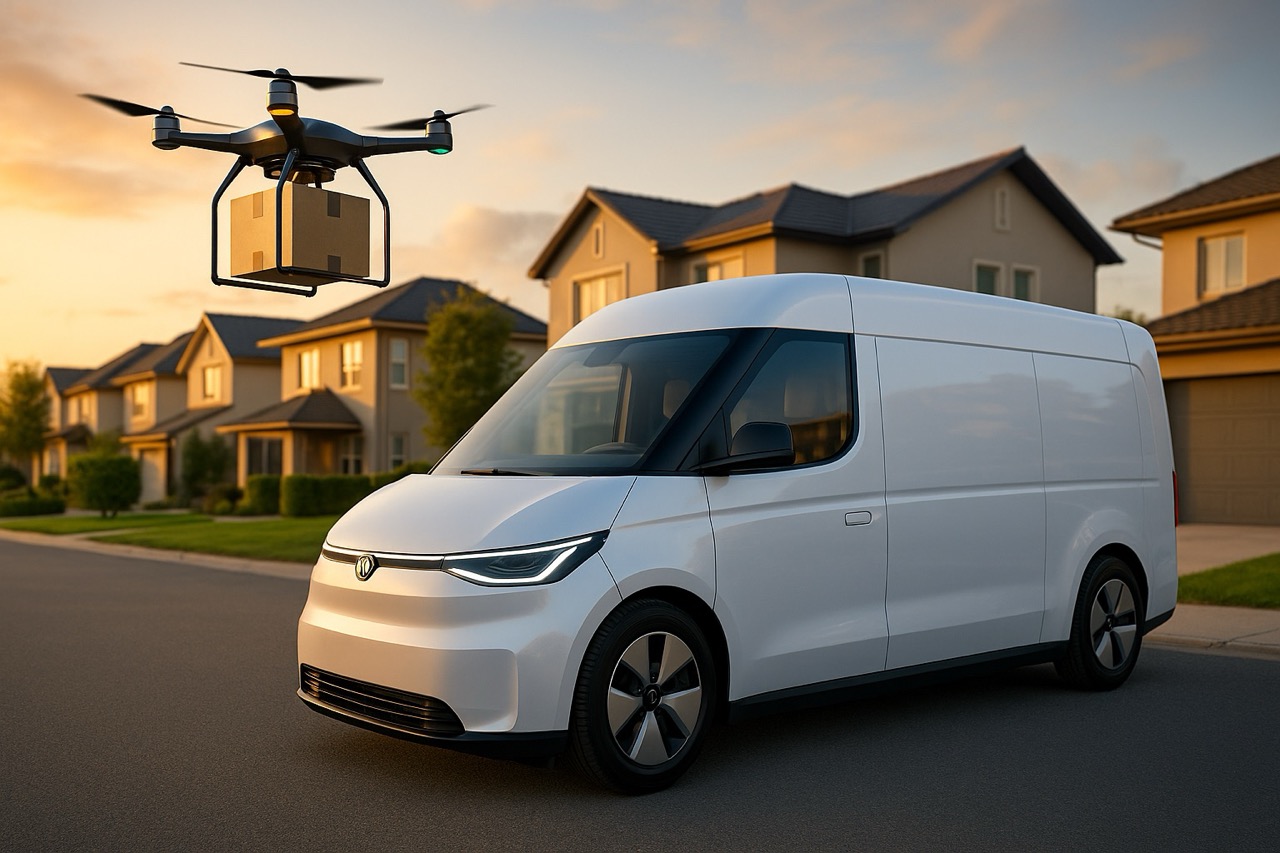
Table of Contents
- Drones That Cut Through Congestion
- Driverless Trucks That Don’t Clock Out
- Lower Emissions, Better Margins
- Navigating the Regulatory Puzzle
- Safety Without the Second-Guessing
- Giving Your Team New Tools, Not Pink Slips
- Real-Time Delivery Gets Even Smarter
- Why Drones and Driverless Trucks Matter in Last-Mile Delivery
- In Conclusion
If you’re managing logistics in today’s world, you already know how demanding last-mile delivery has become. It’s not just about speed anymore—customers want fast, accurate, and sustainable service. That’s where drones and driverless trucks come in. They’re not concepts anymore. They’re operational in test markets, scaling fast, and quickly becoming tools you’ll need to compete. With automation helping bypass traffic, reduce costs, and cut emissions, these technologies are reshaping what efficient last-mile logistics looks like. In this article, you’ll see how they’re working now, what they bring to the table, and how you can start adapting your operations for the near future.
Drones That Cut Through Congestion
When you’re trying to get a package to a customer across town during peak traffic hours, a drone can do what no truck ever could—fly over the problem. These small aircraft are designed to carry lightweight parcels over short distances, often reducing delivery times from hours to minutes. In areas where road congestion or remote geography poses a challenge, drones become a faster and cleaner alternative.
You’re probably seeing major retailers already testing this at scale. Walmart’s drone delivery network covers areas within a 10-mile radius of its stores. Zipline, a drone delivery company, already supports medical and retail deliveries across multiple countries, and their drones are making real-time deliveries with precision landings. This isn’t a pilot project—it’s a proven tool when deployed with the right infrastructure.
Driverless Trucks That Don’t Clock Out
When labor is short and delivery demand keeps climbing, having vehicles that don’t need rest breaks is a huge advantage. Driverless trucks are already being deployed for fixed-route deliveries and warehouse-to-hub transfers. These trucks use advanced LiDAR, radar, and GPS technologies to navigate city streets and highways without human input.
What’s impressive is their ability to optimize routes in real time, avoid delays, and operate with high efficiency. You can use these trucks to extend your delivery window or increase frequency without hiring additional drivers. For last-mile applications, they’re ideal for high-density, repetitive routes—like local food delivery, e-commerce drop-offs, and pharmacy orders. That’s not theory—it’s already in motion in cities like Phoenix and Shanghai.
Lower Emissions, Better Margins
If you’re under pressure to meet sustainability goals while cutting logistics costs, drones and electric driverless vehicles offer a clear path forward. Drones use electric propulsion, so each flight is virtually carbon-free. Autonomous trucks are increasingly powered by electricity or low-emission fuel, helping cut your overall carbon output while also reducing fuel spend.
Pair that with route optimization and fewer idle hours, and you’re improving your environmental impact and your bottom line. For companies trying to reduce scope 3 emissions in their supply chain, last-mile automation offers a measurable and scalable solution—without asking customers to compromise on convenience.
Navigating the Regulatory Puzzle
Of course, you can’t just launch a drone from your loading dock and start making deliveries. Airspace regulations, local zoning, safety clearances, and privacy concerns all factor in. But don’t let that slow you down—these hurdles are being addressed quickly. In the U.S., the FAA has already approved pilot programs for drone delivery with companies like Amazon and Zipline.
When you plan your rollout, start by identifying regions where regulations are more supportive. Test programs in semi-rural or low-congestion zones are often the easiest way to launch. Driverless trucks face similar permitting requirements, but once your use case is proven, local authorities are typically cooperative—especially when safety measures are built-in and benefits to traffic and emissions are clear.
Safety Without the Second-Guessing
One of the most common concerns with autonomous vehicles and drones is safety. That concern is valid—but the technology has come a long way. Autonomous trucks have backup braking systems, obstacle detection, and emergency stop protocols that reduce accident risks. Drones use geofencing and real-time collision avoidance, and they don’t rely on human judgment under fatigue or pressure.
You’re also removing human exposure from high-risk environments. Instead of rushing deliveries in dense traffic or during extreme weather, automated systems handle the load while your staff supervises or steps in only when needed. This makes your overall operation safer while also reducing liability risks.
Giving Your Team New Tools, Not Pink Slips
Automation often triggers fear about job loss, but in the last-mile sector, the story looks different. Instead of replacing jobs, you’re reshaping them. Your team shifts from physically delivering every item to managing fleets of delivery drones, maintaining AVs, and optimizing delivery performance through tech platforms.
That opens up new training opportunities, promotes long-term retention, and moves your team into more tech-forward roles. You reduce burnout, improve operational stability, and build a workforce that adapts with your tools instead of falling behind them.
Real-Time Delivery Gets Even Smarter
If you’ve already adopted route optimization software, adding drones or autonomous trucks takes that to the next level. You can create fully integrated delivery networks where your system chooses the most efficient method—drone, driverless van, or hybrid—based on weather, package size, urgency, and route availability.
You also improve visibility. Drones and AVs are equipped with telemetry that feeds data back to your logistics platform, giving you real-time updates on package status, estimated arrival, and equipment health. This helps you keep customers informed without the need for driver updates or delivery check-ins.
Why Drones and Driverless Trucks Matter in Last-Mile Delivery
- Shorten delivery times dramatically
- Cut emissions with electric transport
- Reduce labor pressure and operating costs
- Improve safety with autonomous navigation
- Increase delivery frequency and reliability
- Integrate with route optimization software
- Future-proof last-mile logistics operations
In Conclusion
Drones and driverless trucks aren’t concepts—they’re tools you can start using to solve real last-mile delivery problems. Whether you’re trying to cut through traffic, lower your delivery emissions, or scale service without expanding your driver pool, these technologies offer real advantages. They don’t eliminate people—they make your team more efficient, your operation more responsive, and your customer experience more consistent. With the right planning and testing, they’re not only feasible—they’re essential for staying ahead in a market that’s moving faster every year.
Stay ahead of the curve in supply chain innovation. Get more in-depth insights and updates at Benjamin Gordon’s YouTube.
Related Posts

How to Build a Business Case for a New Supply Chain Software
Learn how to build a supply chain software business case with...

Your Warehouse Workers Are Your Biggest Untapped Asset
Treat warehouse workers as a business asset to improve accuracy, safety,...

7 Best Software Solutions for Cold Chain Compliance and Safety
Discover the 7 best cold chain software solutions for compliance, temperature...

The Data Your TMS Provides Is Probably Wrong. Here’s Why.
TMS data accuracy issues can distort ETA, cost, and service reporting....